
Test automation –
focus on testing speed
Discover a new testing standard – automation that accelerates your business

Test automation –
focus on testing speed
Discover a new testing standard – automation that accelerates your business
What is test automation?

Test automation transforms repetitive tasks into machine-executable scripts and scenarios to verify application behavior from module to user interface – in a way that’s quick, repeatable, and measurable. It’s an organized system of people, tools, and processes for continuous quality checking, not just before release.
Test automation transforms repetitive tasks into machine-executable scripts and scenarios to verify application behavior from module to user interface – in a way that’s quick, repeatable, and measurable. It’s an organized system of people, tools, and processes for continuous quality checking, not just before release.
Test automation benefits for the software lifecycle

Faster, high-quality deployment
Parallel launches and night
tests reduce regression time
from days to hours, while
teams deliver more tested,
stable changes.

Lower cost of regression cycles
Reusing automated scripts reduces the manual effort you need for repetitive tests. Manual testers can focus on specific cases, usability evaluation,
and exploratory testing.

Broader and more representative coverage
You can verify multiple paths, configurations, and devices without a proportional increase in resources. Plus, you reduce the risk of overlooking critical variants and errors revealed late in the development process.

Stable, reproducible
results
With standardized input data
and automatic assertions, you
limit the impact of the human factor. Over time, reports from
runs become more consistent
and comparable.

Early detection
of regression
A short feedback loop lets you quickly confirm the impact of changes and fix them before production. This significantly reduces the number of incidents after deployment.

Compliance and full auditability
Versioned test cases and steps, along with results, create complete, auditable test documentation. This facilitates internal and external audits and speeds up compliance reviews.

Better use of your team's potential
When automation takes over routine tasks, specialists can focus
on risk analysis and testing new features. This way, you get higher quality without having to hire more people.

Pragmatic AI
support
Artificial intelligence suggests cases, stabilizes element identifiers, and prioritizes risk areas. Tests are better at reflecting real-world use and identifying areas that need attention.
Faster, high-quality deployment
Parallel launches and night
tests reduce regression time
from days to hours, while
teams deliver more tested,
stable changes.
Lower cost of regression cycles
Reusing automated scripts reduces the manual effort you need for repetitive tests. Manual testers can focus on specific cases, usability evaluation,
and exploratory testing.
Broader and more representative coverage
You can verify multiple paths, configurations, and devices without a proportional increase in resources. Plus, you reduce the risk of overlooking critical variants and errors revealed late in the development process.
Stable, reproducible
results
With standardized input data
and automatic assertions, you
limit the impact of the human factor. Over time, reports from
runs become more consistent
and comparable.
Early detection
of regression
A short feedback loop lets you quickly confirm the impact of changes and fix them before production. This significantly reduces the number of incidents after deployment.
Compliance and full auditability
Versioned test cases and steps, along with results, create complete, auditable test documentation. This facilitates internal and external audits and speeds up compliance reviews.
Better use of your team's potential
When automation takes over routine tasks, specialists can focus
on risk analysis and testing new features. This way, you get higher quality without having to hire more people.
Pragmatic AI
support
Artificial intelligence suggests cases, stabilizes element identifiers, and prioritizes risk areas. Tests are better at reflecting real-world use and identifying areas that need attention.
Common challenges in manual testing

Manual testing
is time-consuming
Full regression manual testing with every release slows down the entire deployment cycle and delays time to value.

Tests are difficult
to scale
As the system expands, the number of scenarios grows faster than manual tests can cover, making manual testing increasingly inefficient.

You risk functional regression
Without automated testing, it’s hard to quickly and reliably verify the impact of new changes on existing functionality, which increases the risk of production errors.

Scenario coverage
is limited
Manual testing focuses on main paths and overlooks many data combinations or rare cases, which may hide real risks.

Frequent changes
go through bottlenecks
With frequent changes in an application, it’s hard to keep the testing pace. Automation helps reduce response times and deliver new software versions faster.
Common challenges in manual testing
Manual testing
is time-consuming
Full regression manual testing with every release slows down the entire deployment cycle and delays time to value.
Tests are difficult
to scale
As the system expands, the number of scenarios grows faster than manual tests can cover, making manual testing increasingly inefficient.
You risk functional regression
Without automated testing, it’s hard to quickly and reliably verify the impact of new changes on existing functionality, which increases the risk of production errors.
Scenario coverage
is limited
Manual testing focuses on main paths and overlooks many data combinations or rare cases, which may hide real risks.
Frequent changes go through bottlenecks
With frequent changes in an application, it’s hard to keep the testing pace. Automation helps reduce response times and deliver new software versions faster.
Why test automation with Soflab Technology?

A business-oriented approach to test automation
Proprietary frameworks
and tailor-made solutions

Over 30 experts specialized
in test automation

Partnerships with leading commercial tool vendors

Experience implementing
large-scale test automation solutions
Top 3 in test automation: Computerworld - Si Cap Gemini
(3rd place)
What can we automate?
Automate repetitive system or application tests and focus on R&D testing. Soflab Technology experts build effective and cost-optimal solutions based on years of experience in the field.

Small & Startup
- Automated web and desktop
application testing - Automated mobile application testing (Android, iOS)

Medium / SME
- API testing automation and integration
- Automated verification of extensive testing environments

Enterprise
- Automated enterprise-class system testing (SAP, ERP)
- Automated test data generation
Results our clients see
60%
reduced testing time

Find out how to calculate ROI from automated testing
This is a simple guide to calculating return on investment, taking into account not only labour savings but also implementation time, quality and hidden costs. It explains in simple terms concepts such as Cost of Delay, WSJF, the 1-10-100 rule and DRE, and suggests what data to collect post-implementation in order to have hard figures.
Download this if you want to avoid common mistakes and demonstrate the true value of automation in figures, without exaggeration.
How can automation help your business?

Release-ready for SaaS platforms (Salesforce/
ServiceNow/Workday/SAP)
Regular updates from solution providers can disrupt key processes and configurations. Automate testing of key processes to quickly evaluate the impact of changes before implementation.
The result: releases and upgrades under quality control, shorter testing windows, and fewer incidents after implementation.

Compliance and continuity
in healthcare systems
Modifications to medical data exchange standards in healthcare applications can disrupt the flow of information and negatively impact patient care. Automated testing of key patient pathways and staff permissions helps maintain continuity of care and comply with regulations.
The result: lower operational risk, fewer data quality incidents, and audit readiness.

Roles and permissions under control
Excessive permissions and unclear role division increase the risk of abuse and audit issues. Automated access and unauthorized scenario testing helps verify the right permission levels and quickly identify gaps.
The result: predictable access security, compliance, and reduced risk exposure.

Applications built based
on low-code platforms (Power Platform/
OutSystems/Mendix)
Quick modifications in low-code can lead to errors. Automated process and permission testing are key to software stability.
The result: agility without chaos, fewer tickets, and higher user satisfaction.

Reliable billing services
Complex sales offers and frequent price list changes easily translate into incorrect calculations or problems with service activation. Automated testing of pricing and service activation in multiple variants helps catch errors before they affect your customers.
The result: predictable billing, fewer errors, and stable revenue.

Error-free CPQ – product configuration and pricing
Complex setup forms can easily lead to inconsistent pricing and business terms across sales channels. Automated testing of configuration, pricing, and quote generation rules help standardize pricing assessments and prevent costly mistakes.
The result: consistent prices, faster quotes, and fewer corrections on the customer side.

E-documents under control (e-invoices, e-documents)
Automated document generation and circulation tests verify the content and regulatory compliance.
The result: fewer complaints and returns, a complete audit trail, and peace of mind during reviews.

Risk-free integration
with regulatory platforms (Public/Utilities)
Updates to requirements and communications by public institutions can interrupt data exchange and generate correction costs. Automated compliance testing of exchanges and flows helps keep communication flowing and ensures regulatory compliance.
The result: predictable implementation, compliance documentation, and increased public trust.

Regulatory compliance
in finance and HR
Frequent changes in regulations and regulatory requirements call for clear evidence of quality and compliance. Automated testing of customer verification and compliance decision processes helps stay compliant and demonstrate evidence for audits.
The result: audit readiness, reduced risk of penalties, and uninterrupted sales.
Release-ready for SaaS platforms (Salesforce/
ServiceNow/Workday/SAP)
Regular updates from solution providers can disrupt key processes and configurations. Automate testing of key processes to quickly evaluate the impact of changes before implementation.
The result: releases and upgrades under quality control, shorter testing windows, and fewer incidents after implementation.
Compliance and continuity
in healthcare systems
Modifications to medical data exchange standards in healthcare applications can disrupt the flow of information and negatively impact patient care. Automated testing of key patient pathways and staff permissions helps maintain continuity of care and comply with regulations.
The result: lower operational risk, fewer data quality incidents, and audit readiness.
Roles and permissions under control
Excessive permissions and unclear role division increase the risk of abuse and audit issues. Automated access and unauthorized scenario testing helps verify the right permission levels and quickly identify gaps.
The result: predictable access security, compliance, and reduced risk exposure.
Applications built based
on low-code platforms (Power Platform/
OutSystems/Mendix)
Quick modifications in low-code can lead to errors. Automated process and permission testing are key to software stability.
The result: agility without chaos, fewer tickets, and higher user satisfaction.
Reliable billing services
Complex sales offers and frequent price list changes easily translate into incorrect calculations or problems with service activation. Automated testing of pricing and service activation in multiple variants helps catch errors before they affect your customers.
The result: predictable billing, fewer errors, and stable revenue.
Error-free CPQ – product configuration and pricing
Complex setup forms can easily lead to inconsistent pricing and business terms across sales channels. Automated testing of configuration, pricing, and quote generation rules help standardize pricing assessments and prevent costly mistakes.
The result: consistent prices, faster quotes, and fewer corrections on the customer side.
E-documents under control (e-invoices, e-documents)
Automated document generation and circulation tests verify the content and regulatory compliance.
The result: fewer complaints and returns, a complete audit trail, and peace of mind during reviews.
Risk-free integration
with regulatory platforms (Public/Utilities)
Updates to requirements and communications by public institutions can interrupt data exchange and generate correction costs. Automated compliance testing of exchanges and flows helps keep communication flowing and ensures regulatory compliance.
The result: predictable implementation, compliance documentation, and increased public trust.
Regulatory compliance
in finance and HR
Frequent changes in regulations and regulatory requirements call for clear evidence of quality and compliance. Automated testing of customer verification and compliance decision processes helps stay compliant and demonstrate evidence for audits.
The result: audit readiness, reduced risk of penalties, and uninterrupted sales.
How do we support you in test automation?

Expert diagnosis and tailored
test automation development plan from initial analysis to product roadmap

Help selecting
open-source
and commercial tools tailored to your team, budget,
and tech stack

Implementation of testing tools
and building
on-prem, cloud,
and mobile
environments with DevOps integration

Automation of UI, API, mobile,
and E2E processes aligned with your business

Integration of automation
with CI/CD, data management,
and reporting
in the software development cycle

Maintenance
and development of automated scripts with oversight
and updates
How do we support you in test automation?

Expert diagnosis
and tailored test
automation development plan from initial analysis to product roadmap

Help selecting open-source
and commercial tools tailored to your team, budget, and tech stack

Implementation of testing tools and building on-prem, cloud, and mobile environments with DevOps integration

Automation of UI, API, mobile, and E2E processes aligned with your business

Integration of automation with CI/CD, data management, and reporting in the software development cycle

Maintenance and development of automated scripts with oversight
and updates
Our tech stack
Open-Source
Solutions
Commercial
Solutions
DevOps & CI/CD
TestOps & QA Management
- Web automation,
UI, and API - BDD framework and Java scripts
- Dedicated solutions (mobileLAB, TA Reporting)
- Web automation,
UI, and API - E2E, SAP, and boxed application Testing
- Low-code and No-Code
- AI (self-healing, object detection)
- Implementations
and licensing
- Integration with DevOps pipeline
- Building runtime environments
- Mobile device runtime environments (emulators, simulators, and real devices)
- Test automation integration
- Quality management
- Metrics and reporting
- Soflab Test Automation Reporting System
Solutions
- Web automation, UI, and API
- BDD framework and Java scripts
- Dedicated solutions (mobileLAB, TA Reporting)
Solutions
- Web UI and API automation
- E2E, SAP, and boxed application Testing
- Low-code and No-Code
- AI (self-healing, object detection)
- Implementations and licensing
- Integration with DevOps pipeline
- Building runtime environments
- Mobile device runtime environments (emulators, simulators, and real devices)
- Test automation integration
- Quality management
- Metrics and reporting
- Soflab Test Automation Reporting System
Our experts

Michał Figiel
Head of Technical Testing
Department

Małgorzata Sadowska
Testing Expert

Kamil Budas
Technical Testing
Section Leader

Damian Wójcik
Test Automation
Specialist
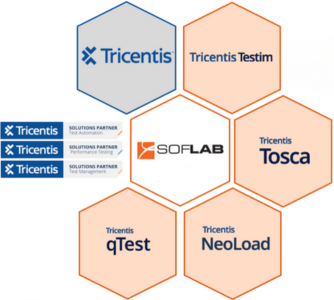
Tricentis Certified Partnership







Licenses and implementations
We’re a Tricentis license and implementation provider.

Consulting and support
We optimize QA processes and ensure implementation according to industry best practices.

Integration
We integrate Tricentis tools with your DevOps/CI/CD processes.

Training
We onboard teams on how to use Tricentis tools
to their full potential.
Why Soflab?

16 years of experience

Polish Innovation Award

> 8,000 completed projects

200 people on board

Reputable clients

ISO 27001 certificate
Schedule a free consultation
Speed up releases and bring down quality costs with test automation tailored to your CI/CD. Book a quick call for an action plan and quick wins.
We offer:
- Specifics only, no sales pitch
- A mini-audit of your current testing approach
- A preliminary automation plan
- Post-meeting materials: a one-pager with recommendations and KPIs
Fill out the form and schedule a meeting.

Michał Figiel
Head of Technical Testing Department

